
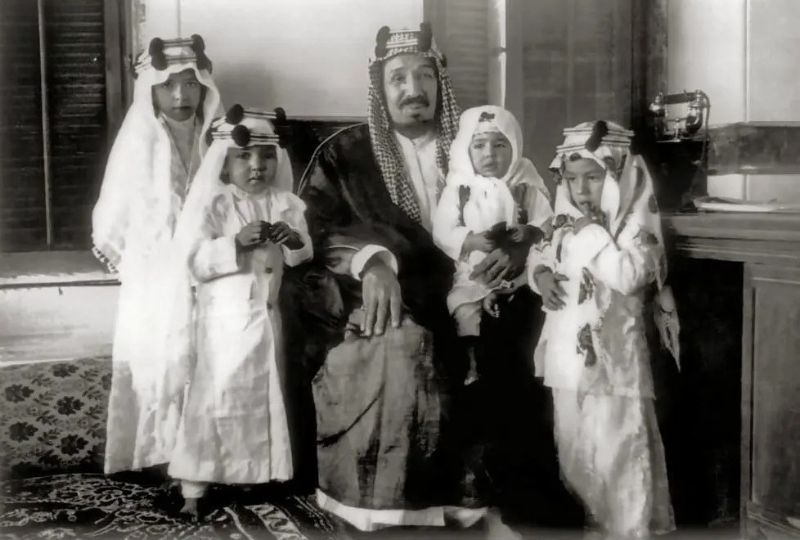
The attire and personal possessions of King Abdulaziz bin Abdulrahman Al Saud were characterised by understated simplicity, traditional elegance, and meticulous grooming across seasons and occasions, as documented by the King Abdulaziz Foundation for Research and Archives (Darah) to mark National Day.
According to Darah, King Abdulaziz favoured white garments—frequently pairing a white bisht (cloak) with a white ghutra (headscarf) on Fridays.
His everyday wardrobe centred on a loosely tailored thobe, alongside a formal style featuring wide, draped triangular sleeves worn during his youth for holidays and official occasions. In winter, he wore a wool jubba (outer coat) fastened at the upper chest with cord loops and buttons.
A signature element of the King's appearance was the muqassab iqal—a headband woven with gold thread. The distinctive headpiece drew international note in 1943, when a LIFE magazine correspondent observed that the King wore a golden iqal rather than a royal crown. His bishts, typically chosen in black, white, or oudi (rich brown), were often trimmed with metallic zari threads and finished with corded spherical ornaments.
The documentation also highlights the King's personal effects, including reading glasses, a pocket watch, and a long, curved cane carved from wood, which held deep historical significance dating back to his time in Kuwait before the recapture of Riyadh. When asked during a gathering why he appeared lost in thought, the young leader replied that while he held nothing but his cane, he envisioned ruling Najd from east to west—a grand vision that completely consumed his mind.
Among his most cherished items was a silver ring set with an agate stone bearing his name, which remained on his finger throughout his life until his final illness. Renowned for his hospitality and refined grooming, King Abdulaziz also maintained a deep affinity for fine scents, keeping pure rose oil in a dedicated leather case and generously presenting high-grade oud and incense to his guests.