
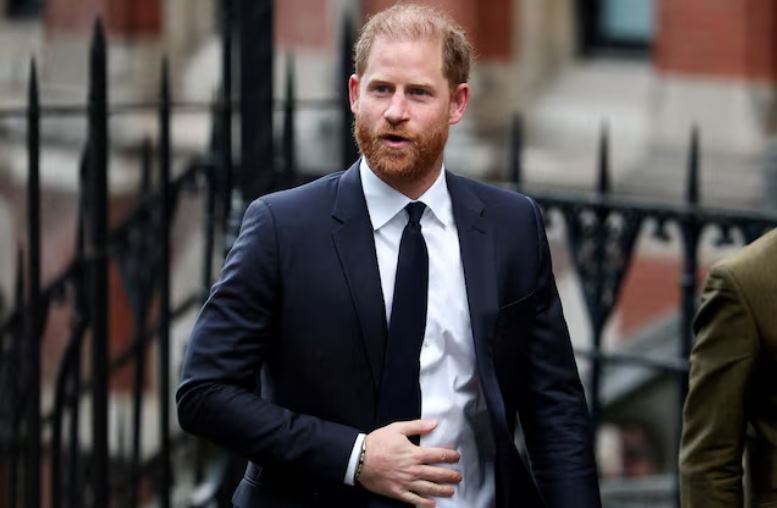
A key witness in a privacy lawsuit brought by Prince Harry and other high-profile figures against the Daily Mail told London’s High Court yesterday the claimants had been conned and he denied signing a damning statement against the paper’s publisher.
Harry, the younger son of King Charles, and six others including singer Elton John have accused Associated Newspapers’ tabloids of being involved in widespread unlawful information gathering including phone-hacking dating back 30 years.
Associated, which also publishes the Mail on Sunday, has denied any wrongdoing. The trial has already heard evidence from Harry and the other claimants as well as numerous senior current and former journalists and staff at Associated.
Yesterday private investigator Gavin Burrows, whose testimony could decide the outcome, said the lawsuit ‘was based on a pack of lies’.
In August 2021, the claimants’ lawyers say Burrows signed a witness statement in which he stated he had ‘targeted hundreds, possibly thousands of people’ for Associated, from tapping landlines and hacking voicemails to obtaining information by deception.
Those allegations help form a substantial part of the claimants’ case.
Burrows later told Associated’s legal team he had never made this statement and that his signature had been faked, telling the court he had first heard about the allegations attributed to him by reading a newspaper report.
“This statement has nothing to do with me,” Burrows – who gave evidence from an undisclosed overseas location as he says he and his family have received threats – told the court by videolink.
“You have got to explain to your claimants how you have been conned,” he said during testy exchanges with their lawyer David Sherborne who was given permission to treat his own witness as ‘hostile’. “This thing is based on a pack of lies.”
Associated have cast the whole case as manufactured and funded by opponents of the Press such as the late motor racing boss and privacy campaigner Max Mosley, and that a ‘research team’ assisting the claimants’ lawyers had paid witnesses to provide evidence.