
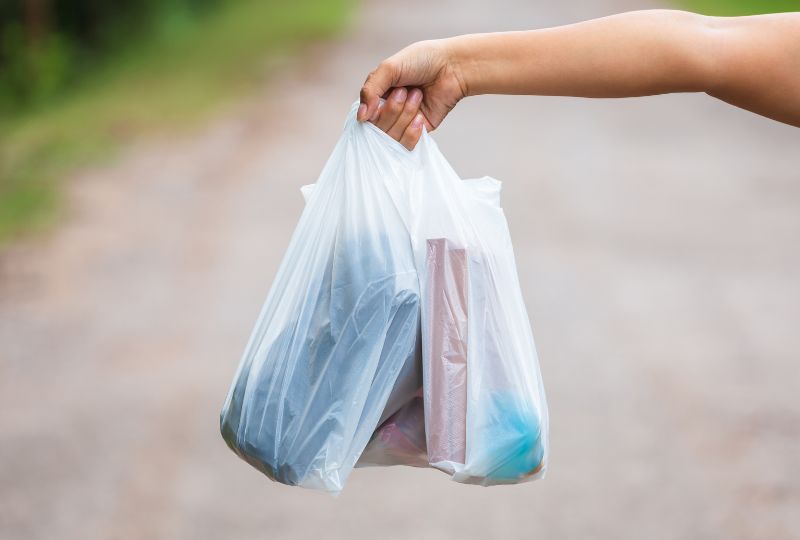
I like to think of myself as reasonably environmentally-conscious. I switch off lights when I leave a room, try not to waste water and occasionally feel guilty when I forget to recycle something. So, I suppose I should welcome the phasing out of plastic shopping bags in supermarkets. It is, after all, a small step towards saving the planet.
But I do have a question.
If we are so concerned about plastic, why does practically everything we buy seem to arrive wrapped in the stuff?
Take a cucumber. Once upon a time, a cucumber was simply a cucumber. You picked it up, put it in your shopping basket and took it home. Now, depending on where you shop, it may come encased in enough plastic film to survive a nuclear winter. Remove the wrapping and you are left wondering which of the two will take longer to decompose.
Then there are the trays, tubs, pouches, sleeves and assorted transparent coverings that surround our groceries. A packet of biscuits can contain more packaging than biscuits. A small quantity of fruit can arrive in a plastic container, wrapped in plastic film, with a plastic label attached. Presumably, the next development will be a plastic bag to carry it all home in. Oh, hang on. We’ve banned those.
However, the carrier bag has another use. When we have emptied the groceries and put them away, we hang the carrier bag on a hook and use it for all the plastic wrapping we have removed and all the other kitchen waste. When it is full we tie it off and put it in the wheelie bin. If we did not have these carrier bags because the government has banned the supermarkets from supplying them then we are simply going to purchase a roll of plastic bags for the garbage so the net result is planet nil, wallet less.
Instead, we are encouraged to bring reusable bags. We have many they live in a cupboard, multiply mysteriously and are never available when we need them.
Of course, reusable bags can make a genuine difference, particularly when we use them repeatedly rather than treating them as disposable alternatives. Plastic carrier bags also create real environmental problems when they are discarded carelessly. Nobody sensible wants beaches, streets and oceans littered with plastic waste.
But surely the objective should be to reduce unnecessary plastic, not simply to change the type of bag we use at the checkout.
Perhaps supermarkets could make greater efforts to reduce excessive packaging, offer more products without unnecessary wrapping and encourage suppliers to find practical alternatives. Governments and consumers have a part to play, too. It is a little unfair to congratulate ourselves on refusing a carrier bag while wheeling home a trolley full of plastic-wrapped groceries.
I am not suggesting that we abandon the campaign against plastic bags. I am merely wondering whether we have concentrated on the most visible part of the problem because it is the easiest to tackle. After all, it is much simpler to ask a customer to bring a bag than to persuade an entire supply chain to rethink its packaging.
So, next time I remember to take my reusable bags to the supermarket, I shall congratulate myself on doing my bit for the planet.
Then I shall unpack my shopping, fill the wheelie bin with plastic packaging and wonder whether the planet is quite as impressed as the supermarket hopes it is.
Jackie@JBeedie.com