
Before I launch into my column this week, a quick confession: my interest in sports and athletics is strictly academic. Truth be told, even showing up for my twice-weekly exercise session is an inner battle, and I barely manage to scrape together 5,000 steps a day (unlike a few newspaper editors I know who run marathons as a casual hobby!).
Naturally, my complete lack of personal athletic prowess does not stop me from having a firm opinion. This week, my thoughts are with women and high-risk sports.
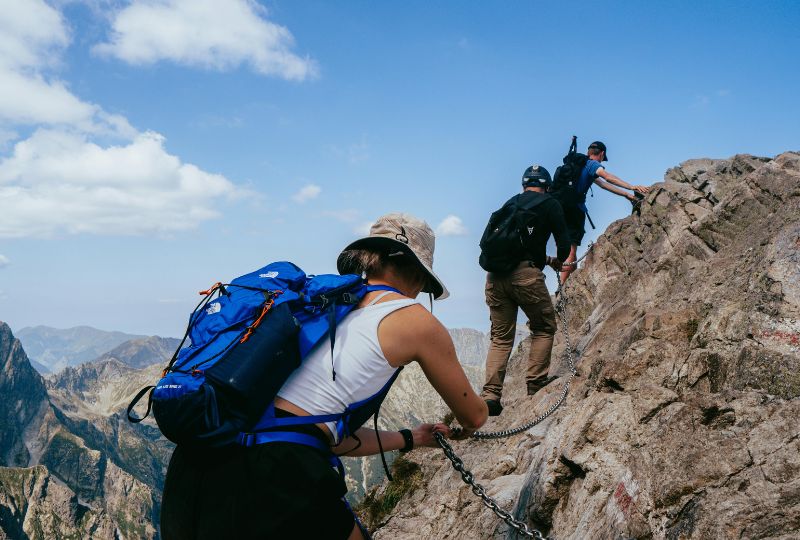
Increasingly, women are testing their physical limits, nerve and resilience against elemental forces like wild seas and unforgiving mountains. And Nature is anything but bucolic, and she extracts savage retribution from anyone who dares to challenge her supremacy.
The tragic news that a climbing expedition in Pakistan’s formidable Karakoram range cost the lives of four mountaineers – with others missing – has reignited an old, familiar debate. Crucially, the expedition included two female climbers. These were not casual amateurs – Omani mountaineer Nadhira Al Harthy had already blazed a trail as the first Omani woman to summit Mount Everest. American climber Mallory Geis was attempting her first 8,000-metre peak, having dedicated vast amounts of time, resource and energy to preparing for the gruelling ascent.
Yet, after the initial wave of sympathy for athletes who lose their lives pursuing their passion, the public commentary inevitably shifts towards a line of questioning that male sportspeople almost never face: “Should she really have risked her life?” As a woman, shouldn’t she have trained better? And if she has children, “How could a mother take such an unnecessary risk in the first place?”
Let us be honest with ourselves. Did any of us ask these searching questions of Steve Irwin, the beloved Australian conservationist, when he tragically died from a stingray injury whilst filming on the Great Barrier Reef? He was rightly praised for his brave commitment to wildlife conservation and his impressive body of work. Virtually nobody suggested that, as the father of two young children, he had no business going deep-sea diving.
When women suffer accidents in extreme sports, their misfortunes are far more frequently attributed to inherent emotional vulnerability, panic, physical frailty, or a fundamental lack of skill. They are framed as being ‘in over their heads’ in a high-stakes arena where they do not naturally belong. Online commentary targeting female athletes often turns sharp, accusing them of ‘wasting rescue resources’ on an endeavour they ought to have avoided entirely. Men’s accidents, by contrast, are far more likely to be categorised as ‘freak occurrences’, bad luck, unpredictable weather shifts, or noble miscalculations by brave men pushing the boundaries of human potential.
In truth, anyone who pushes their boundaries in adventure sports must learn two vital lessons: first, you do it for yourself, not for anyone else’s approval.
Second, high adventure carries an inherent risk of failure, and a wise adventurer knows when to retreat to fight another day.
When my mountaineer friend Madhu Sarda had to call for an emergency evacuation after severe frostbite and appalling weather thwarted her summit attempt, she admitted that calling for help was the hardest decision of all – far harder than blindly pushing forward to ‘prove’ herself.
Knowing when to step back and preserve life is not a failure of nerve; it is the ultimate mark of maturity. And that, surely, is a solid life lesson for us all.
meeraresponse@gmail.com
Noted climber among 10 killed – Page 13