
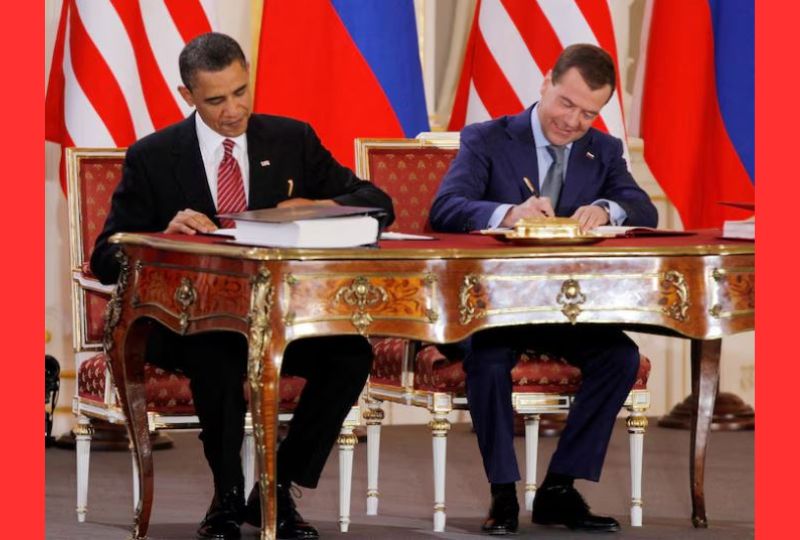
Russia said yesterday it was open to security talks but would resolutely counter any new threats, as the expiry of its last arms control treaty with the US marked the end of more than half a century of limits on both sides’ strategic nuclear weapons.
The New START treaty expired yesterday, and Moscow said the US had not responded to President Vladimir Putin’s proposal to keep observing the missile and warhead limits for another 12 months.
“Essentially, our ideas are being deliberately ignored. This (US) approach appears mistaken and regrettable,” the Russian Foreign Ministry said in a statement.
Security experts say the end of New START risks ushering in a new arms race that will also be fuelled by China’s rapid nuclear build-up.
Russia and the US will both be free to increase missile numbers and deploy hundreds more strategic warheads, although this poses logistical challenges and will take time.
In the absence of a treaty framework that provides stability and predictability, analysts say each side will find it harder to read the other’s intentions.
That could lead to a spiral in which each feels the need to keep on adding weapons, based on worst-case assumptions about what the other is planning.
While criticising the US stance, the Russian statement struck a balance between assertiveness and restraint.
It said that neither side was now bound by the treaty’s limits but Moscow intended to act “responsibly and prudently”, based on a thorough analysis of US military policy and the overall strategic environment.
Russia “remains prepared to take decisive military-technical countermeasures to mitigate potential additional threats to national security”, it said.
At the same time, it was “open to exploring political and diplomatic avenues for comprehensive stabilisation of the strategic situation based on equitable and mutually beneficial dialogue solutions, should the appropriate conditions for such interaction emerge”.
There was no immediate response from the US.
President Donald Trump has said he wants China to be part of arms control and questioned why the US and Russia should build new nuclear weapons given that they have enough to destroy the world many times over.
The White House said this week that Trump would decide the way forward on nuclear arms control, which he would “clarify on his own timeline”.
As the clock ticked towards the treaty’s expiry, Pope Leo urged both sides earlier yesterday not to abandon the limits set in the treaty.
“I issue an urgent appeal not to let this instrument lapse,” the first US-born pope said at his weekly audience.
“It is more urgent than ever to replace the logic of fear and distrust with a shared ethic, capable of guiding choices towards the common good.”
Matt Korda, associate director for the Nuclear Information Project at the Federation of American Scientists, said that if there were no agreement to extend the treaty’s key provisions, neither Russia nor the US would be constrained if they wanted to add yet more warheads.
“Without the treaty, each side will be free to upload hundreds of additional warheads onto their deployed missiles and heavy bombers, roughly doubling the sizes of their currently deployed arsenals in the most maximalist scenario,” he said.
But Korda said it was important to recognise that the expiry of New START did not necessarily mean an arms race, given the cost of nuclear weapons.