
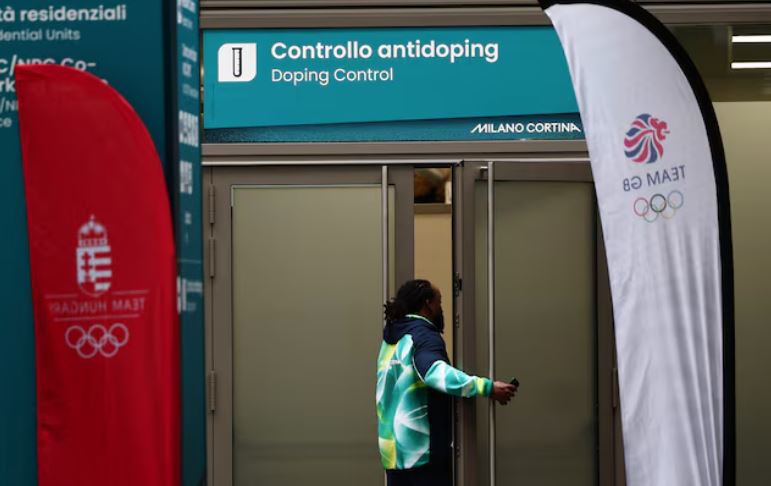
Winter Olympics – More than 90 per cent of athletes competing at the Milano Cortina Winter Olympics have been tested at least once for banned substances ahead of the Games, the International Testing Agency (ITA) said yesterday.
Around 2,800 athletes from more than 90 countries will be competing at the Games which start on Friday.
“The International Testing Agency (ITA) concludes the pre-Games anti-doping programme for the Olympic Winter Games Milano Cortina 2026 and reports that at least 92pc of athletes were tested a minimum of one time ahead of the event.”
The ITA, which has been conducting all drug testing for the Olympics since the Tokyo Games held in 2021, is in charge of all pre-Games testing as well as testing during the 16 days of competition.
“A total of more than 7,100 doping controls were conducted during the pre-Games phase in the six months ahead of the Games,” the ITA said.
It said it had particularly focused on high-risk disciplines since August 2025, and among those sports 91pc of athletes were tested at least once, and 66pc at least three times leading up to the Olympics.
“Of the 8pc not tested athletes, 28pc belong to high-risk disciplines. Careful attention will be placed on these athletes by the ITA during the Games,” it said.
The sports which had the highest percentage of conducted tests were ski jumping, biathlon, luge and both speedskating and short-track speedskating, while the national Olympic Committees with the highest percentage of testing were China, the US, Germany and Spain, with over 94pc of their athletes tested.
With doping being a major concern a few years back, the International Olympic Committee decided to have comprehensive pre-Games testing in order to root out as many drug cheats as possible before they arrived at the Games.
Italian biathlete Rebecca Passler was excluded from the Milano Cortina Olympics on Monday after testing positive for banned substances in a doping test.